
 Schema Markup Checker
Schema Markup Checker is a free online tool that extracts structured data from a given web page and shows it in a readable format.
You can use it to inspect your own pages or to check what kind of markup is in use by your competitors.
It allows you to:
- Ensure the JSON is valid and can be parsed by crawlers. (A missing bracket can ruin everything!)
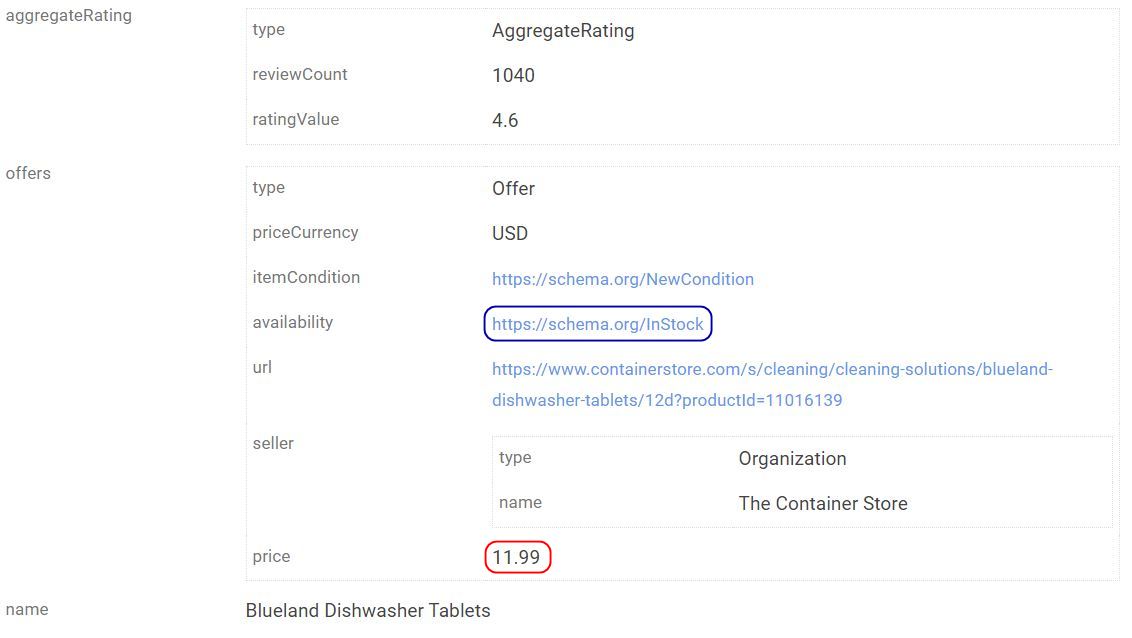
- Preview the full structured data rendered in table format.
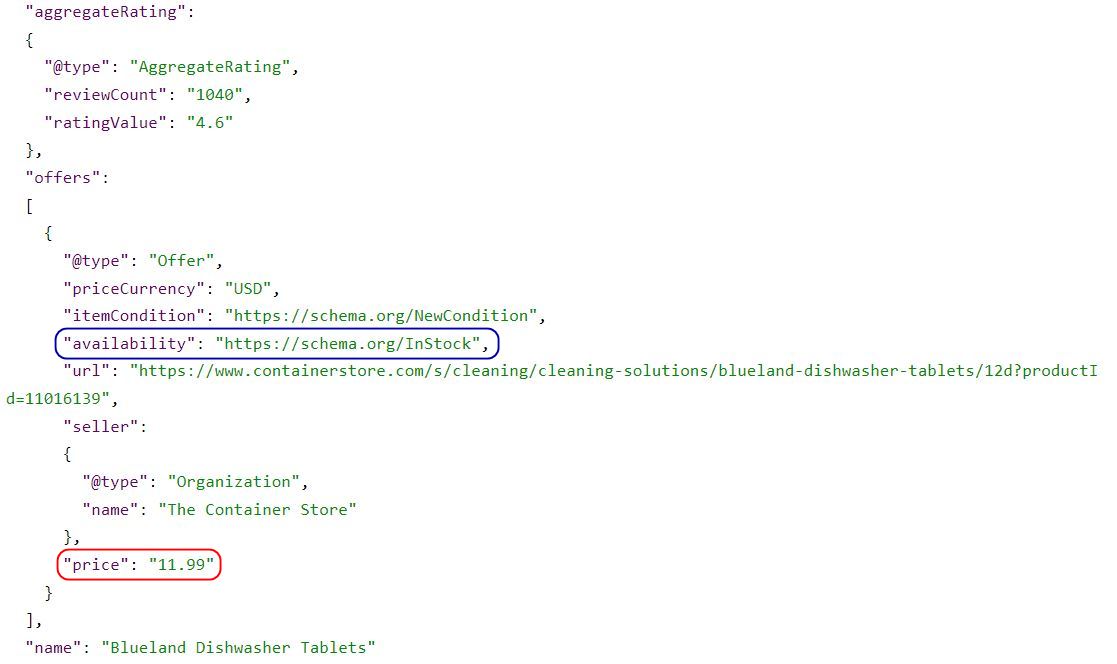
- View the raw JSON-LD source.
Visualize Your Schema
Schema Markup Checker renders the parsed data in the easy-to-read table format:

It also shows the JSON-LD source code, formatted and syntax-highlighted:

Spy on Your Competitors
You can use this tool to find the type of schema markup your competitors use by researching their Google search snippets.
Here is an example. Take a look at the rich snippet that contains extra data like reviews, product price, and availability information:
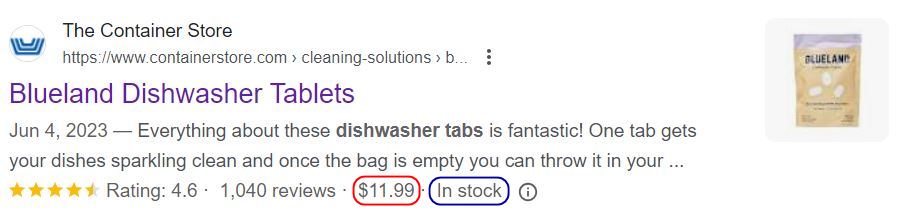
After exploring the page markup with Schema Markup Checker, you will know which schema entities you need to implement on your website to achieve similar results:
Reveal Errors
Make sure your HTML markup can be parsed and decoded.
We've seen unreadable JSON markup having syntax errors even on reputable sites.
If you doubt that a semicolon after the final "}" can break the parsing of your JSON-LD, you can check it yourself via the links to Google Rich Results Test and Schema.org Validator in the Additional Resources section.
* The current version doesn't validate the correctness of schema definitions.
JSON-LD or Microdata?
Our tool supports both JSON-LD and Microdata structured data markup types.
- JSON-LD is structured data in JSON format which is placed in script tags.
- Microdata is a specification that allows embedding structured data within existing HTML tags.
When deciding between JSON-LD and Microdata, the first option is usually preferred. JSON-LD offers several advantages over Microdata, including easier implementation and cleaner code separation. In addition, JSON-LD is much easier to maintain because it is not spread across multiple tags throughout an HTML page.
What Schema Types Are Supported?
This tool lists all schema data available on the page.
What Schema Types Are Showing up on Google?
There are a number of Schema.org types showcased in Google's rich snippets:
- Article (Article, NewsArticle, BlogPosting)
Key properties displayed in rich snippets include headline, datePublished, and articleBody. For instance, when searching for a news topic, Google often presents articles with their publication date prominently displayed beneath the headline.
- Event
Events are highlighted in Google search results using Event schema, which includes some specialized properties such as startDate, endDate, eventStatus, and location.
- Organization
Google can make use of this markup in knowledge panels and other visual elements. Key properties include the organization's name, url, logo, contact information (email, telephone, contactPoint), address, and social profiles (sameAs).
- Product (Product, Offer)
Product markup enriches search results with details about various products. The main properties are name, brand, priceCurrency, price, priceValidUntil, availability, itemCondition, etc.
- Recipe
Google showcases Recipe schema for culinary content. Rich snippets for recipes commonly include images (image, thumbnailUrl), preparation times (prepTime, cookTime, totalTime), and user ratings.
- Review (Review, AggregateRating)
Review schema facilitates the display of a short excerpt of a review or a rating of the product, business, or service in Google's rich snippet. Notable properties showcased include ratingValue and reviewCount.
For a full list of structured data types, supported by Google, consult the documentation.
What About FAQ Schema?
Unless your website is authoritative and government or health-related, FAQ Schema (FAQPage, Question, and Answer types) will no longer be displayed by Google:
Going forward, FAQ (from FAQPage structured data) rich results will only be shown for well-known, authoritative government and health websites. For all other sites, this rich result will no longer be shown regularly.
(Source)
 Website Information
 Keyword Density Analyzer